
why NECROMANCER SUCKS! (AI Edition)
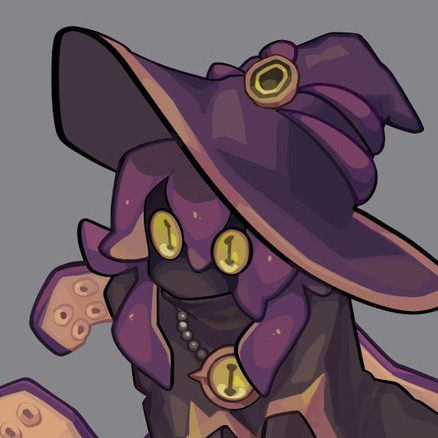

In Tower Defense Simulator, every tower is expected to justify its place on the battlefield. Some towers provide overwhelming damage, some offer support, and others fill specialized roles that become valuable in specific strategies. Even weaker towers can be fun if they have an interesting purpose, a unique mechanic, or a satisfying progression path. Unfortunately, the Necromancer struggles to meet these standards. Although the tower has an appealing theme and a visually interesting concept, its performance often fails to match its appearance. Instead of feeling like a terrifying master of the dead, the Necromancer frequently feels inefficient, awkward, and underwhelming compared with other towers that cost similar resources. Its weaknesses are especially obvious in higher-level gameplay, where reliability, damage output, range, and consistency matter more than novelty. The Necromancer from Tower Defense Simulator sucks because its damage is inconsistent, its summoned units are fragile, its mechanics are unreliable, its cost is difficult to justify, and its style is more impressive than its actual impact.
The biggest problem with the Necromancer is that its concept promises far more than its gameplay delivers. A necromancer should feel powerful. The fantasy of the tower is obvious: it should defeat enemies, raise the dead, create an army, and overwhelm the battlefield through dark magic. Players naturally expect a tower with this theme to become stronger as the game continues. At low levels, it might summon weak skeletons, but at higher levels it should produce increasingly dangerous minions capable of turning the tide of a battle. Instead, the Necromancer often creates units that seem more like temporary distractions than a genuine army.
This disconnect between theme and performance makes the tower disappointing. The design suggests control over death itself, but the gameplay often amounts to producing disposable enemies that are quickly destroyed. The Necromancer does not always feel like a commander of the undead. It can feel more like a tower that sends small targets toward enemies and hopes they survive long enough to matter. A tower does not have to be the strongest in the game to be successful, but it should make players feel that its central idea is working. When the main feature of the tower—its undead summons—fails to make a meaningful difference, the entire tower begins to feel pointless.
Another serious issue is the weakness of the summoned skeletons. Summoned units can be extremely useful in tower defense games because they provide extra bodies, stall enemies, block paths, or deal additional damage. However, these benefits depend on the summons being strong enough to survive and contribute. If the skeletons die almost immediately, their existence becomes mostly visual. They may technically add damage, but their actual impact is difficult to notice.
Fragile summons also create an inconsistency problem. The Necromancer’s effectiveness depends heavily on the enemies currently appearing on the map. Against weak enemies, the skeletons might survive long enough to help. Against fast, powerful, or area-damaging enemies, they may disappear before reaching their targets. This means that the tower’s performance can change drastically from one wave to another. A reliable tower should provide consistent value, but the Necromancer can feel useful in one moment and completely irrelevant in the next.
The skeletons are also vulnerable to the same general problems that affect many temporary units. They may struggle to keep up with enemies, get eliminated by splash damage, or fail to reach targets because of pathing limitations. In a game where enemies become faster and stronger as the match progresses, a unit that cannot reliably survive or connect with enemies becomes less valuable over time. The Necromancer’s army may look impressive when several summons appear at once, but appearance is not the same as effectiveness. A large group of weak units is still weak if the group cannot deal meaningful damage or delay enemies.
The tower’s damage output is another reason it performs poorly. In Tower Defense Simulator, players usually evaluate towers by asking a simple question: how much value does this tower provide for its cost? The Necromancer often struggles to answer that question. Other damage towers can specialize in high single-target damage, powerful splash damage, rapid firing, or strong late-game scaling. Support towers can improve the performance of an entire defense. The Necromancer, however, sits in an uncomfortable middle ground. It may deal some direct damage and produce summons, but neither role is always strong enough to make it a superior choice.
This is especially damaging because tower defense games reward specialization. A tower that does several things moderately well can be less valuable than a tower that does one thing exceptionally well. For example, a dedicated damage tower can eliminate enemies directly, while a support tower can improve the attack speed or range of nearby towers. The Necromancer’s mixed design sounds versatile, but its versatility does not necessarily translate into strength. Its direct attacks may not compete with specialized damage dealers, while its skeletons may not be durable enough to replace a true stalling or defensive option.
The issue becomes even more obvious in late-game scenarios. Early waves are usually forgiving. Almost any reasonably functional tower can defeat basic enemies when they have low health. The real test comes when enemies gain large health pools, special abilities, speed, armor, or resistance. At that point, players need towers that scale well. If the Necromancer’s summons remain weak while enemies become stronger, the tower falls behind. Its early-game usefulness does not compensate for its inability to remain relevant during the waves that matter most.
Cost is closely connected to this problem. A tower can be weak and still be worthwhile if it is cheap. Likewise, an expensive tower can be acceptable if it provides extraordinary power. The Necromancer becomes frustrating when its price does not match its actual contribution. Players invest money not only in the initial placement but also in upgrades. Every upgrade represents an opportunity cost: choosing the Necromancer means not choosing another tower that might produce more damage, offer stronger support, or perform more reliably.
In a difficult match, inefficient spending can cause an entire strategy to collapse. Money spent on an underperforming Necromancer could have been used for a stronger early-game tower, a powerful farming setup, or an upgrade to an already effective damage dealer. If the Necromancer requires several upgrades before it becomes useful, it may place too much pressure on the player during the most important part of the game. If it never becomes especially powerful, then the investment feels wasted.
This is one of the worst kinds of weakness in a tower defense game: not being completely unusable, but being just inefficient enough to punish anyone who chooses it. Players can sometimes make the Necromancer work, especially in casual matches or creative strategies. However, “it can work if everything goes well” is not a strong defense of a tower. Almost every tower can be made useful under the right circumstances. The better question is whether the Necromancer is one of the best choices for the role it occupies. Too often, the answer is no.
The tower’s pathing and targeting can also make it frustrating to use. Summoned units are only valuable if they move properly and attack effectively. If skeletons become stuck, walk inefficiently, fail to reach enemies, or disappear at inconvenient times, the player loses control over a major part of the tower’s usefulness. Unlike a normal projectile, which travels directly toward a target, a summoned unit must navigate the map. This creates more opportunities for the mechanic to fail.
Targeting problems are particularly harmful in intense waves. A player may expect the Necromancer to create a defensive wall or overwhelm an approaching group, only to see the skeletons wander into an ineffective position. In a game where timing matters, even a short delay can allow an enemy to pass through the defense. The tower’s summons should feel like a strategic tool, but poor movement can make them feel random. Randomness can be entertaining in small amounts, but too much of it makes a tower unreliable.
The Necromancer also suffers from competition with other towers that fulfill similar purposes more effectively. If a player wants extra units on the map, there may be other towers with stronger troops, better durability, or more useful abilities. If the player wants area damage, specialized splash towers are usually a safer choice. If the player wants support or stalling, dedicated support towers often provide more consistent benefits. The Necromancer’s main advantage is supposed to be its unique combination of attacks and summons, but uniqueness alone does not guarantee usefulness.
This is an important distinction. A tower can be unique without being good. In fact, unique towers can sometimes be harder to balance because their mechanics are unusual. The developers may avoid making the Necromancer too powerful because an army of summons could potentially overwhelm the game’s balance. As a result, the tower may be restrained so heavily that it becomes weak. The concept is interesting, but the balance decisions surrounding it may prevent it from reaching its full potential.
The visual design of the Necromancer may also contribute to the disappointment. Aesthetically, the tower has one of the most recognizable themes in the game. It evokes dark magic, undead armies, and supernatural power. Players may purchase or use it because it looks cool, only to discover that the visual presentation is more impressive than the actual gameplay. This creates a “style over substance” problem. The tower appears threatening, but its battlefield results do not always support that image.
Good design should connect appearance, sound, animation, and mechanics. When a powerful attack lands, it should feel powerful. When a necromancer raises the dead, the resulting units should feel like a meaningful force. If the summons vanish instantly or contribute barely noticeable damage, the fantasy becomes hollow. The tower technically performs its advertised function, but it does not create the emotional effect players expect. Instead of feeling like a commander controlling an unstoppable undead horde, the player may feel like they are operating a less effective version of a standard damage tower.
Despite all these criticisms, the Necromancer is not entirely without value. It has a distinctive identity, a memorable theme, and a mechanic that can be entertaining in casual play. Some players enjoy using unusual towers precisely because they are not the obvious meta choice. The Necromancer can also be useful in situations where extra bodies, distraction, or temporary damage are enough to handle weaker enemies. Its shortcomings do not mean that every player is wrong for liking it.
However, a tower can be fun and still be poorly designed from a competitive standpoint. The Necromancer’s biggest problem is that players often have to choose between using it because they enjoy its theme and using a stronger tower because they want to win efficiently. That conflict is not always bad—many games include off-meta options—but the gap should not be so severe that the tower feels like a handicap. A fun tower should ideally offer a unique strategy, not merely a weaker version of existing options.
To improve the Necromancer, the developers could strengthen its summons without making the tower overwhelmingly powerful. The skeletons could receive better health scaling, improved movement speed, stronger damage, or greater resistance to area attacks. Higher upgrades could introduce different types of undead, such as durable armored skeletons, ranged skeleton archers, or support units that weaken enemies. These changes would make the tower’s progression feel more meaningful and would better reflect its theme.
The Necromancer could also benefit from a clearer role. It might become a strong stalling tower, a summon-based damage tower, or a support tower that enhances nearby undead units. At present, its mixed identity can make it difficult to understand what the player is supposed to gain from using it. A more focused design would make the tower easier to balance and more satisfying to play.
In conclusion, the Necromancer from Tower Defense Simulator sucks because it fails to live up to its own impressive concept. Its skeletons are often too fragile, its damage output is not consistently competitive, its cost can be difficult to justify, and its summons may suffer from unreliable pathing and targeting. While the tower looks unique and has an entertaining theme, its actual contribution to a serious defense can feel disappointing. It occupies an awkward position between damage, support, and stalling without mastering any of them. The Necromancer is not necessarily unusable, but players frequently have better options for nearly every role it attempts to fill.
A true necromancer should command the battlefield through overwhelming control of the undead. It should make enemies feel surrounded, threatened, and outmatched. Instead, the tower often produces a temporary group of weak skeletons that disappear before they can make a meaningful difference. Until its summons become stronger, its upgrades become more rewarding, and its role becomes more focused, the Necromancer will remain a cool-looking tower with disappointing performance—a tower that has the appearance of power without consistently delivering the results.